Chalk Farm Road removals tips for narrow access jobs
Posted on 16/07/2026
Moving on or near Chalk Farm Road can be straightforward on paper and then suddenly very fiddly once you see the actual access. Tight stairwells, shared hallways, parked cars, awkward corners, low kerbs, and nowhere sensible to stop the van can turn a simple job into a slow one. That is exactly why Chalk Farm Road removals tips for narrow access jobs matter: they help you plan the move around the street, not just around the boxes.
If you are dealing with a flat, a shop, an office, or a top-floor property with limited access, the difference between a smooth move and a stressful one is usually preparation. The good news? Narrow access jobs are very manageable when you treat them like a logistics problem instead of a last-minute lift-and-carry exercise. A bit of measuring, a better packing plan, and the right vehicle choice go a long way. And, to be fair, they save your back too.
This guide breaks down what actually works in real life: how to assess access, how to protect furniture, when to choose a smaller vehicle, and how to avoid the classic mistakes that eat up time on moving day. If you want a broader look at moving options in the capital, you may also find the team's Camden removals overview useful alongside this article.
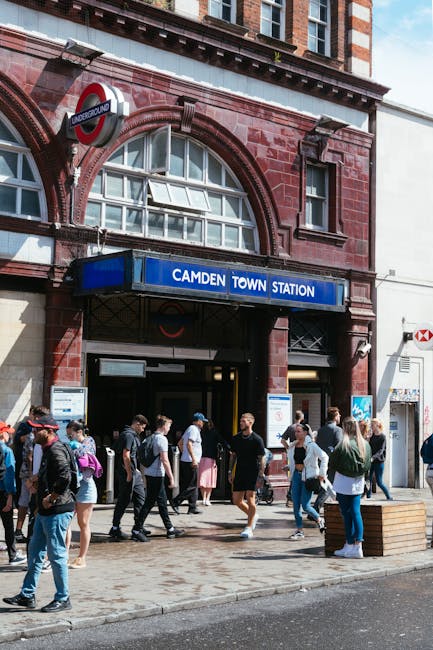
Why Chalk Farm Road removals tips for narrow access jobs matters
Narrow access changes everything. On a regular move, the van can usually pull close enough to the entrance and loading is fairly direct. On a cramped street or in a building with awkward access, every extra step matters. A sofa that looks fine in the lounge can become a serious problem on a twisting stairwell. A fridge that seems light enough can suddenly feel twice as heavy once you realise it has to be rotated three times to get through a landing.
Chalk Farm Road and the surrounding streets can present the sort of day-to-day urban obstacles that people forget about until moving day: limited stopping space, pedestrian traffic, busy periods, and buildings that were not designed around modern furniture sizes. That makes planning more important than brute force. If you prepare for the access first, the move is calmer, faster, and usually cheaper because fewer things go wrong.
This is also where narrow access jobs can become deceptive. A move that looks like a small flat move can still require more labour, more time, and more careful vehicle positioning than a larger property with easy roadside access. In other words, volume is only one part of the picture. Access is the other half. Sometimes the bigger headache is the staircase, not the wardrobe.
For people moving into flats or compact homes, the advice in this article pairs well with the practical approach used in flat removals in Camden Town, where tight access is part of normal working life rather than an exception.
How Chalk Farm Road removals tips for narrow access jobs works
The basic idea is simple: reduce friction before the team arrives. With narrow access removals, the most successful jobs usually follow the same pattern. First, the access is checked in detail. Then the load is prepared so items can be carried safely through the space. Finally, the vehicle and crew size are matched to the layout rather than to a generic moving plan.
In practice, that means looking at the whole route, not just the front door. You want to know where the van can stop, how far it is to the entrance, whether there are steps or a lift, whether doorways are narrow, and whether furniture needs to be dismantled. That sounds obvious, but people miss it all the time. They focus on the packing and forget the corridor.
On tricky jobs, a smaller van or a man and van setup is often the better fit than a larger removal vehicle. That is not because smaller is always cheaper in every case; it is because a better fit can save time and prevent failed manoeuvres. If a larger van cannot park close enough, you may waste the time you were trying to save. The right vehicle choice matters more than the flashiest one.
The moving process usually works best in these stages:
- Pre-visit or access review: check the route, the loading point, and any likely pinch points.
- Item preparation: dismantle where sensible, remove loose parts, and protect fragile surfaces.
- Staging: line items up near the exit so porters are not weaving through the property repeatedly.
- Load sequencing: move the biggest and most awkward items first if access allows, then stack boxes and lighter items around them.
- Final sweep: check cupboards, loft spaces, sheds, balconies, and forgotten under-bed storage.
That sequence sounds neat, but real-life jobs are a bit messier. Someone always finds one last lamp or a drawer full of cables. It happens. Good planning just leaves enough room for the surprise bits.
Key benefits and practical advantages
When narrow access is handled well, the benefits are immediate. The job finishes sooner, the risk of damage drops, and everyone is less frazzled by the end of the day. That alone is worth it, especially if you are moving in London traffic where even a small delay can ripple through the whole schedule.
- Less property damage: careful measurements and padding reduce scuffs on walls, bannisters, and door frames.
- Fewer lifting risks: shorter carry routes and smarter handling reduce strain.
- Better time control: a planned access route avoids the stop-start chaos that slows jobs down.
- Improved vehicle efficiency: the right van size and parking plan help the crew work continuously.
- Lower stress: once the access is understood, everything feels more manageable.
There is also a financial side. A well-organised narrow access move often avoids the hidden costs that come from delay, extra labour, or damaged items. You do not need a perfect move; you need a predictable one. Predictable is good. Predictable is very good.
If you are comparing broader moving support, the company's removal services in Camden Town page gives useful context on the different kinds of help available for local moves.
Who this is for and when it makes sense
These tips are most useful if your move involves any of the following:
- top-floor or basement flats
- narrow internal staircases
- shared entrances with limited turning space
- rear access only through a side passage or alley
- restricted roadside loading
- heavy items that barely clear the doorway
- short-term moves where timing is tight
If you are moving a student flat, a first rental, or a compact one-bedroom, the access problem may feel bigger than the actual volume of furniture. That is normal. A few large items can create more difficulty than a full flat of boxes. Likewise, small business moves, stock relocation, and market-related work can have strict timing and access limits that leave very little room for error. In those cases, moving smart matters more than moving hard.
Narrow access planning also makes sense when you are moving something awkward, such as antiques, a piano, or bulky furniture with no easy disassembly route. In those cases, careful handling matters from the very start. A specialist approach, such as the one used for piano removals in Camden Town, can be the difference between a controlled move and a very nerve-jangling one.
Step-by-step guidance
1. Measure the access route properly
Do not guess. Measure doorway widths, stair widths, ceiling height where there are bends, and the dimensions of large items. Also check the width of the narrowest part of the route, because that is usually where the problem appears. A tape measure and a quick notebook can prevent a very awkward surprise later.
2. Check the van stopping point before moving day
Where will the van actually sit? If the answer is "somewhere nearby," that is not enough. You need to know whether there is legal parking, whether loading restrictions apply, and whether the stop point leaves enough room for the tail lift or rear access. Even an extra 20 metres can matter. It sounds small until you are carrying a wardrobe in winter rain.
3. Decide what should be dismantled
Large bed frames, table legs, shelving, and certain wardrobes are often easier to move in sections. If something can be safely dismantled without losing structural integrity, it usually should be. Keep fixings in labelled bags and tape them to the matching item or place them in one clearly marked box. You will thank yourself later. Probably twice.
4. Pack for carry, not just for storage
Boxing items neatly is one thing. Making them carry-friendly is another. In narrow access jobs, you want boxes that are not overfilled, well sealed, and easy to grip. Avoid awkward heavy boxes with loose contents shifting around inside them. If you need more practical packing guidance, the company's packing and boxes advice can help you prepare items more efficiently.
5. Create a landing zone
Inside the property, make one clear area where items can be staged before being carried out. This avoids clutter near the door and gives the crew a clean route. On narrow access jobs, clutter is the enemy. Shoes, plant pots, coat stands, bin bags, and loose cables all become trip hazards if they are left in the path.
6. Protect the pinch points
Put padding on the most vulnerable corners, especially on sharp turns, painted walls, bannister rails, and door frames. If a route includes a tight bend on the stairs, protection there pays for itself very quickly. It is far easier to add a bit of extra cover than to repair a scratched wall after the fact.
7. Load in the right order
Usually, the bulkiest and most awkward items should go in first, followed by boxes and lighter items that can be stacked around them. That said, narrow access jobs sometimes require a more flexible approach if the carry route is difficult. The real rule is simple: load to reduce damage and make unloading logical at the other end.
8. Do a final access sweep
Before leaving, look once more at the route. Check the kitchen, bathroom cabinets, loft, cupboards under the stairs, balcony storage, and any corner where a forgotten item likes to hide. A short final sweep can prevent a needless extra trip, and honestly, it is often the easiest part of the day.
Expert tips for better results
One of the best narrow access tips is also one of the simplest: think like the item, not the mover. Ask yourself what the furniture will have to do. Turn, tilt, slide, lift, carry, rotate. If you know the route in advance, you can predict the awkward movement before it happens. That little mental habit saves a lot of faffing about.
Here are a few extra points that make a noticeable difference:
- Use shorter carry straps for tight staircases: they give more control and reduce swing.
- Label by room and priority: the first boxes needed at the new place should be easy to spot.
- Keep one person free where possible: having someone who can open doors, guide corners, and check parking is surprisingly useful.
- Avoid overloading boxes: a box that is too heavy becomes a handling problem, not a packing victory.
- Take photos of awkward items before dismantling: this helps when rebuilding, especially if there are many similar parts.
If you are moving from a busy household or a furnished flat, furniture handling often becomes the biggest part of the job. The information on furniture removals in Camden Town is worth a look if your move includes larger items that need careful manoeuvring.
Expert summary: For narrow access moves, the smartest setup is usually the one that reduces total handling distance, minimises turns, and keeps each item under control from door to van. Fancy? No. Effective? Absolutely.
One more thing. If the route is awkward enough, do not be shy about slowing the pace. Rushing is where damage creeps in. Slow is not always slow, if that makes sense. Sometimes controlled and safe is actually faster in the end.
Common mistakes to avoid
Most narrow access problems are not disasters. They are just small mistakes that stack up. The trouble is that they are easy to dismiss beforehand. "It'll be fine." Famous last words, and all that.
- Not measuring properly: eyeballing a doorway is risky when a sofa or mattress needs to pass through at an angle.
- Assuming the van can park nearby: a loading space may not exist when you need it.
- Leaving packing until the morning of the move: rushed packing creates awkward, unsafe boxes.
- Ignoring internal obstacles: radiators, hanging mirrors, door stops, and tight landings all matter.
- Forgetting dismantling tools: if a bed frame needs to come apart, you do not want to hunt for the Allen key mid-move.
- Using the wrong vehicle size: bigger is not always better if the street is tight.
- Failing to protect surfaces: the cheapest damage to avoid is the damage you never cause.
Another mistake is treating narrow access as a problem only for the moving crew. Actually, the occupier or tenant usually has a big role too. If the route is yours to prepare, you can make a big difference by clearing the way and flagging the tricky bits early. It is a team effort, really.
Tools, resources and recommendations
You do not need specialist kit for every move, but a few items are genuinely useful. Think practical, not gadget-heavy.
| Tool or item | Why it helps | Best use in narrow access jobs |
|---|---|---|
| Measuring tape | Confirms door, stair, and item dimensions | Before booking and before dismantling |
| Furniture blankets | Protects surfaces from scuffs and knocks | On corners, bannisters, and loaded items |
| Straps and trolleys | Improves control and reduces strain | Heavier items and longer carry routes |
| Label markers | Makes unloading faster | Boxes, drawers, dismantled parts |
| Zip bags for fixings | Stops screws and bolts going missing | Flat-pack furniture and beds |
| Door protection pads | Reduces scuffs at tight pinch points | Narrow hallways and awkward bends |
If your move involves less common items or especially bulky pieces, a specialist view is worth considering. For example, moving high-value or unusual furniture often benefits from the kind of care described in the wider services overview, where different moving needs are handled in a more tailored way.
For people who are unsure about the type of move they need, a man and van setup can often be a sensible middle ground. It suits smaller loads, quicker turnarounds, and awkward access where a full-size vehicle would be more trouble than it is worth. The page on man and van in Camden Town is relevant if your job is compact but still a bit tricky.
Law, compliance, standards, or best practice
For moving jobs in London, the important point is not to overcomplicate things: use legal parking where required, avoid blocking access, and follow safe manual handling practice. If a move involves public highway loading, timing and positioning matter, and local restrictions should always be checked in advance. That part is not glamorous, but it is non-negotiable.
Manual handling is another big one. Lifting awkward items through narrow access should be planned so loads are manageable and routes are clear. Best practice is to reduce weight where possible, use proper handling aids, and avoid unnecessary twisting under load. In plain English: do not make bravery do the job of good planning.
Safety also matters inside the property. Shared entrances, communal stairwells, and rented buildings may have their own access rules or expectations. In many cases, the sensible approach is to warn neighbours or the building manager if the move is likely to involve several trips, a larger vehicle, or temporary obstruction. It is not always required, but it often makes the day smoother.
If you want to see how a moving company frames its approach to protection and care, the insurance and safety information is worth reading alongside any planning you do yourself.
Options, methods, or comparison table
There is no single best way to handle a narrow access removal. The right method depends on the item size, route, timing, and how much dismantling is sensible. Here is a practical comparison.
| Method | Best for | Strengths | Limitations |
|---|---|---|---|
| Small van or man and van | Compact loads, tight streets, short carries | Flexible, easier to park, usually faster in restricted access | Less capacity for large multi-room jobs |
| Mid-size removal vehicle | Moderate loads with some access space | Good balance of capacity and manoeuvrability | Can still struggle on very narrow roads |
| Full removal vehicle | Larger home moves with workable access | Efficient for bigger inventories | May be difficult to position on tight roads |
| Split load approach | Jobs where access is poor but volume is manageable | Reduces pressure on parking and carry routes | Can take longer and needs better scheduling |
If you are moving a smaller household or a student property, a more compact approach is often the cleanest option. That is why many people look at student removals in Camden Town when access is awkward and the load is light but still important.
For larger family homes, by contrast, the better option is often a structured house move with clear staging and, where needed, extra handling support. More items means more opportunity for bottlenecks, so the method needs to match the property, not just the postcode.
Case study or real-world example
Here is a realistic example. A two-bedroom flat near Chalk Farm Road had a narrow staircase, no lift, and only limited roadside stopping space. The main problem items were a bed frame, a sofa, a dining table, and several packed boxes. Nothing outrageous. But the route through the building had a tight turn on the first floor landing, and the front entrance opened into a busy pavement area.
The successful approach was simple but disciplined. The bed frame and table were dismantled first. The sofa was measured before the move and wrapped before carrying. Boxes were split into lighter loads rather than packed too heavily. One person managed the door and parking side, while the other handled item movement and corner guidance. That made the whole thing feel calmer almost immediately. Less shouting, less pausing, less guesswork.
The crew used a smaller vehicle positioning strategy so the carry distance stayed short. That mattered more than trying to force a larger van into an awkward stop. The job took coordination, but not drama. And honestly, that is usually the mark of a good narrow access move: it feels almost boring while it is happening. Which is a compliment, by the way.
That kind of approach lines up well with the detail you would expect from an experienced local team such as man with a van in Camden Town, where flexibility and access awareness are part of the job rather than an afterthought.
Practical checklist
Use this before moving day if you want fewer surprises.
- Measure all key doorways, stair widths, and awkward corners.
- Confirm where the vehicle can legally stop.
- Check whether items need dismantling.
- Pack boxes so they are not too heavy or badly balanced.
- Label boxes by room and priority.
- Protect bannisters, walls, and sharp turns.
- Clear hallways, landings, and entrance areas.
- Set aside tools for dismantling and reassembly.
- Keep fragile items separate and clearly marked.
- Tell the moving team about anything unusual: steep steps, timed access, coded doors, low ceilings, or poor lighting.
- Do one last sweep of cupboards, lofts, under-bed spaces, and storage corners.
If your move involves stored items or you are waiting on completion dates, short-term storage can be a useful back-up. The storage options in Camden Town may help bridge a gap if the access job and the schedule do not line up neatly.
Practical takeaway: with narrow access, the real goal is not speed at any cost. It is smooth handling, safe movement, and a plan that fits the building. That is what keeps the day under control.
Conclusion
Chalk Farm Road removals tips for narrow access jobs are really about reducing pressure before it builds. Once the route is measured, the vehicle choice is realistic, and the furniture has been prepared for tight corners, the move stops feeling like a puzzle and starts feeling like a process. A manageable one.
The best moves in tight-access areas are rarely the ones that look impressive. They are the ones that run steadily, with fewer surprises, fewer arguments with door frames, and fewer moments where everyone stands still wondering if the sofa can possibly make that turn. With a bit of planning, it usually can.
If you are comparing move types, thinking about vehicle size, or deciding whether you need extra help for awkward access, it is worth reviewing the practical moving options and choosing the setup that fits the property rather than forcing the property to fit the plan. That little bit of judgement saves a lot of hassle.
Get a free quote today and see how much you can save.
And if you remember only one thing from this guide, make it this: narrow access is a planning job first, a lifting job second. Get the first part right, and the rest becomes a lot less dramatic.